
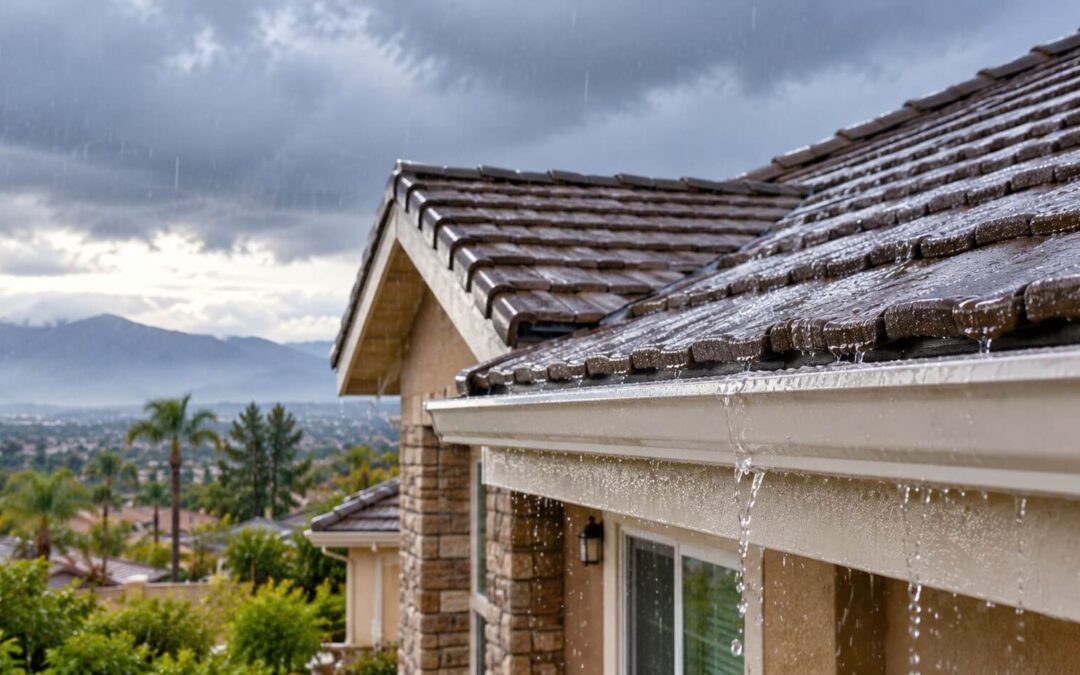
Southern California is known for sunshine, but when rain does arrive, it can quickly reveal some of the signs you need a new roof or at least indicate that your roof deserves a closer look. A roof that appears fine from the ground may have damaged materials, worn flashing or drainage problems that only become obvious once water starts moving across it.
Before the next storm, homeowners can look for several warning signs that may indicate the roof needs attention. Catching a potential problem early can help prevent a small issue from becoming water damage inside the home.
Check for Water Stains Inside Your Home
One of the easiest places to spot a possible roofing problem is actually inside the house. Look at ceilings and upper walls for yellow or brown stains, bubbling paint, peeling drywall or areas that appear darker than the surrounding surface.
Even a small stain deserves attention. Water entering through the roof does not always drip directly beneath the point where it gets in. It can travel along roof decking, framing or other materials before becoming visible inside the home.
If you have access to the attic, look for damp insulation, water staining on wood, musty odors or signs that moisture has recently entered.
Look for Cracked, Missing or Displaced Roofing Materials
Roofing materials take a beating from Southern California sun, heat, wind and changing weather conditions. Over time, shingles can curl, crack or loosen, while roof tiles may break or shift out of position.
You do not need to climb onto the roof to look for obvious problems. From the ground, a window or another safe vantage point, check for sections that look different from the rest of the roof. Missing shingles, broken tiles, uneven areas or roofing material found on the ground after windy weather can all be reasons to have the roof inspected more closely.
A few damaged areas do not automatically mean the entire roof needs replacement, but they should not be ignored before another round of rain.
Pay Attention to Flashing and Roof Penetrations
Many roof leaks begin around areas where the roof surface is interrupted. Chimneys, vents, skylights, pipes and roof-to-wall connections depend on flashing and proper sealing to keep water outside.
As roofing materials age, flashing can loosen, sealants can deteriorate and small gaps can develop. These problems may remain unnoticed during long dry stretches and then become obvious during the first significant rainfall.
Water stains near a chimney, skylight or ceiling vent can be an important clue that one of these areas needs professional evaluation.
Make Sure Gutters and Drainage Areas Are Clear
A roof does more than cover the house. It also needs to move rainwater away efficiently.
Leaves, dirt and other debris can block gutters and drainage areas, causing water to collect or flow where it should not. When water cannot drain properly, it may back up near roof edges or overflow against exterior surfaces.
The California Contractors State License Board also recommends keeping roof valleys and gutters clear because accumulated debris can interfere with proper drainage and contribute to water damage.
Before the rainy season, homeowners should check that gutters and downspouts are reasonably clear and that water has a path away from the home. If you notice overflowing gutters during a storm, that is worth addressing once conditions are safe.
Watch for Recurring Leaks
A leak that has been repaired before deserves extra attention when rain returns. If water stains reappear in the same area or a roof requires repeated patching, the underlying problem may not have been fully resolved.
Recurring leaks can sometimes point to a larger issue with flashing, underlayment, roof decking or aging roofing materials. Rather than continuing to address the visible symptom each time it rains, it may make sense to determine why the problem keeps returning.
This is especially important with older roofs, where several components may be approaching the end of their useful life at the same time.
Check the Roof After Strong Wind and Rain
Southern California storms do not always bring prolonged rainfall, but wind and short periods of heavier rain can still put a roof to the test. After a storm passes, take a few minutes to look around the property.
Watch for roofing materials on the ground, newly displaced tiles or shingles, overflowing drainage areas and new stains inside the home. You may also notice dripping or moisture in places that were previously dry.
A quick check after significant weather can help you identify a problem while the signs are still fresh rather than discovering it weeks or months later.
Some Roof Problems Are Not Visible From the Ground
One of the challenges with roofing is that the surface homeowners can see is only part of the system. Underlayment, decking, flashing and other components all play a role in keeping water out of the home.
For example, a tile roof may look relatively normal from the street even when the waterproofing materials beneath the tiles have deteriorated. That is one reason appearance alone should not be used to judge the condition of an older roof.
If you have noticed leaks, recurring moisture, damaged roofing materials or other warning signs, a professional inspection can provide a much clearer picture of what is happening.
Signs You Need a New Roof: When Is Replacement Worth Considering?
A roof leak does not necessarily mean the entire roof needs to be replaced. A localized problem such as damaged flashing or a limited section of roofing material may be repairable, particularly when the rest of the roof is in good condition.
Some of the clearest signs you need a new roof include widespread deterioration, recurring leaks, an aging roof and repairs that are becoming increasingly frequent. The goal should be to determine whether a repair will provide a reasonable long-term solution or simply postpone a larger roofing project.
Homeowners weighing those options can also learn more about roof repair or replacement and the factors that can help determine which approach makes the most sense.
Get Your Roof Ready for Southern California Weather
Southern California weather can change quickly. Weeks of dry, warm conditions can be followed by rain, wind and cooler temperatures, and those changes can expose weaknesses that were not noticeable during the dry season.
If you are seeing signs you need a new roof or are concerned about the condition of your current roof, Tenco Construction Company can evaluate your roofing needs and help you understand your options. We provide professional roof installation and replacement services for homeowners throughout Southern California, including the Inland Empire, High Desert, Palm Springs and Coachella Valley, Orange County and San Diego County.
Schedule a free estimate or call (866) 272-1451 to learn more about your roofing options.